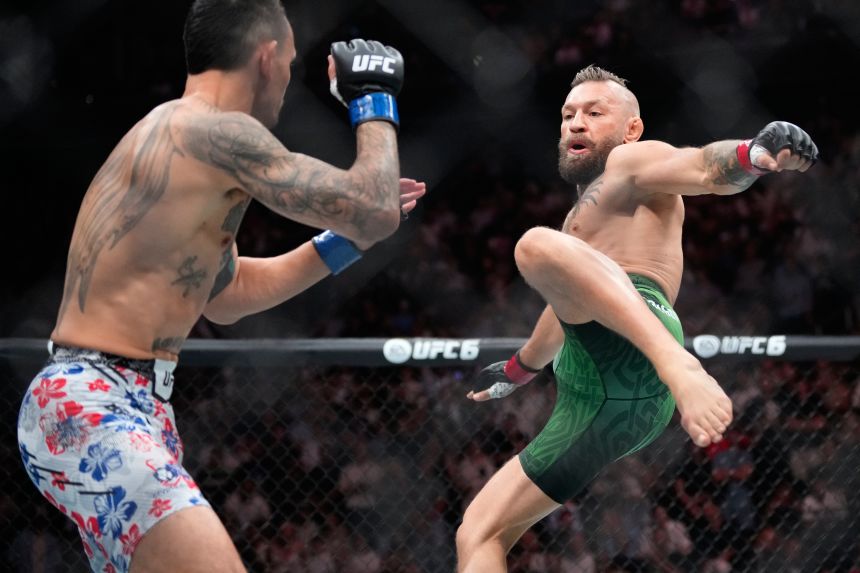
Like many of you, I watched UFC 329 last night with a mix of excitement and morbid curiosity. Conor McGregor has inarguably been one of the most influential people in the history of Mixed Martial Arts. The arc which has seen the sport burst from the very first Ultimate Fighting Championship in 1993, to then being forced underground through regulation where it was in a legal limbo, to a resurrection that saw an event staged on the White House lawn is truly one of the most remarkable stories in sports.
McGregor played no small part in this rise and he has been rewarded handsomely, with a net worth according to some sources of around 200 million dollars. Fans and detractors alike have been wondering why Conor would even bother fighting again after a five year layoff and a less than impressive run towards the end which sidelined him with a catastrophic injury. The motive was not likely to have been financial after all.
However, to anyone that has been a competitor before, much less a fighter, the answer is obvious. The journey of preparation to get into the fight, then the fight itself will bring you to the highest of highs. No one has ever quite scaled the mountain the way Conor McGregor did. At the same time, it will also bring you to the lowest of lows, even in victory, as there is nothing that will ever top that feeling.
Post-fight depression is a real thing. (I think we are seeing this play out in real time with Conor’s one-time nemesis Dustin Poirier.) While not all of us are fighters, I am willing to bet that many who have worked hard towards a goal and actually achieved it would feel something similar. I suppose it’s a mechanism that keeps us as a species moving forward as opposed to resting on our laurels.
So I can actually understand why Conor McGregor would want to get back in the cage again. However, as they say, Father Time is undefeated. There were a lot of unknowns about Conor going into this fight and many of those were unknowns to Conor himself as well. The questions were obvious in hindsight. How do you go from five years of inactivity to championship (the fight was scheduled for five rounds) shape? What were the lingering effects of the gruesome leg break he suffered before? What about the transformation to 170 pounds and how his supplement regime in the time off contributed to things? Finally, while 37 isn’t old by most standards, it’s old for a fighter and it’s around the age that things start happening to the male body at least on a metabolic level.
From a personal standpoint, 37 was about the age I shifted from Adult Competitions to the Masters (whereas age becomes a category), and one of the reasons was that my body had changed. I had been relatively consistent in my training and my habits since my early 20s, and yet the changes happened anyway: I put on some size and strength, my infamous flexibility lessened, and my cardio shifted for the worse. Recovery took much longer and hangovers became a very real thing, which I hadn’t really experienced prior.
The mistake I made and slowly came to correct was realizing that because I had changed, I simply couldn’t do the same things I did when I was a young man. At this point, I take my health and recovery much more seriously than I did, not because I want to be at peak performance, but simply because I want to stay functional. There’s no shortage of willingness to continue to work hard; however, the goalposts have absolutely shifted for me.
I am writing this from a point of “authority” and as a coach who will watch and try to guide many students against going through some of the same things that I personally did, and, even though I know better, I struggle with this myself.
For Conor McGregor to run out with a flying kick like he did was obviously disastrous as he injured himself (if it turns out to be an ACL injury that’s at least a year on the shelf). It may have been a great tactic for a 145-pound 20-something Conor to try, but a 170-pound 37-year-old found out the hard way that it wasn’t a great idea. It’s an understandable mistake in some way; Conor didn’t really have the time to process the changes that had happened to him in his time away, and he tried to come back as the Conor of old, which we were hoping to see but had no right to expect.
I’ve actually never met Conor McGregor (most of the fighters I hung out with are long since retired), but I understand that he has undergone quite a character arc over the years. He obviously needed to fight for some reason that I can sort of fathom, but only he would know the full story. The smarter thing for him to do would be to ride off into the sunset and transition into the next phase of his life, but I also think that would be very difficult for him to do. I think, more realistically, he has a last fight where he goes out on his own terms with all of the knowledge that has been bestowed on him.
While I genuinely want Conor’s story to be a redemption arc as opposed to a cautionary tale, I think there are some lessons for us either way if we can get past our egos. They say, “beware of an old man in a profession where men die young,” which I am inspired by, but the law of the jungle is the longer you are out there the more likely you get eaten up. Finding that balance and living your life is not an easy thing. However we keep moving forward.
No responses yet